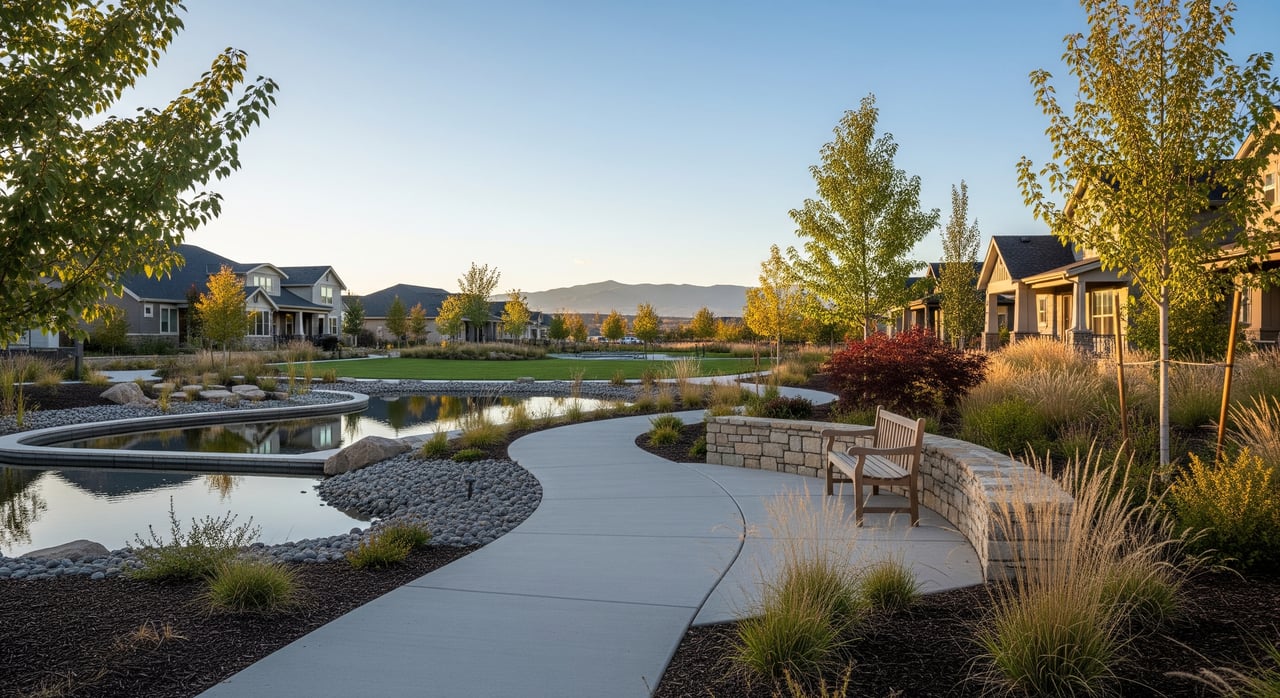
Do you picture your next home just a short stroll from a playground, a shady greenway, or a bike path that links to shops and schools? If you’re moving within Meridian or relocating to the Treasure Valley, parks and pathways can shape your daily rhythm, from morning dog walks to evening rides. You want a neighborhood that fits your routine, not one you have to adapt to. This guide will show you the park and trail types in Meridian, practical walk-time buffers, and how to match amenities to your lifestyle and home search. Let’s dive in.
Meridian’s parks and pathways at a glance
Parks and trails are a core part of life in Meridian. They support everyday play, weekend sports, dog time, and easy exercise. You will see a blend of City parks, school fields, HOA pocket parks, and regional multi-use trails that connect neighborhoods within the Treasure Valley.
Planning and upkeep are shared across public agencies and local communities. The City of Meridian oversees most parks and recreation facilities. Ada County and regional planning groups help knit together long paths and future connections. Many newer subdivisions add private HOA-managed green space and trails, which can add convenience if you prefer amenities close to home.
Park and trail types that shape your day
Regional and destination parks
These are larger parks with multiple fields, big playgrounds, picnic shelters, and event spaces. They host games, community gatherings, and festivals. If your weekends revolve around sports or group meetups, living within a short drive of a regional park can be a high priority.
Community and neighborhood parks
Smaller parks sit inside or next to neighborhoods and serve a close radius. You will often find a playground, open lawns, benches, and shade. These are perfect for quick outings, after-dinner walks, and meeting neighbors.
Natural open space and riparian corridors
Natural areas protect habitat and create a quieter setting for walking and birding. Some follow waterways and include informal trails. If you value calm paths and scenic views, target neighborhoods with easy access to these green edges.
Sports complexes and community recreation centers
Multi-field complexes and indoor centers offer year-round activities, leagues, and classes. These hubs are helpful if you want dependable schedules and structured play for all ages.
Linear paths and greenways
Multi-use paths connect schools, parks, downtown, and shopping districts. They support walking, running, and cycling. If you prefer to leave the car at home for short trips, prioritize homes within a short walk of a trail entrance.
Streetscapes and bike infrastructure
Sidewalks, bike lanes, and traffic-calming features make short trips safer and more pleasant. Parents, new riders, and cycling commuters often look for these on-street details when choosing a neighborhood.
Dog parks and off-leash areas
Fenced areas with small and large dog zones simplify daily routines for pet owners. If you have a dog, check hours, rules, and whether the space is public or HOA-only.
Splash pads and seasonal features
In the summer, splash pads and water features become go-to spots. Living near one can make hot afternoons easier to manage. Confirm seasonal schedules and restroom access.
HOA amenities and access
Many newer communities include HOA-managed parks, pocket trails, and sometimes pools. These add convenience, but they come with dues and rules. Verify access, guest policies, and maintenance standards before you buy.
How close is “close”? Time-based buffers
Use simple time-and-distance ranges to set clear expectations:
- Neighborhood park walk: 0.25 mile is about a 5-6 minute walk. This is a comfortable target if daily play or quick strolls matter to you.
- Short stroll buffer: 0.5 mile is about a 10-12 minute walk, a realistic radius for families and casual walkers.
- Trail access buffer: 0.25-0.5 mile supports easy daily use without loading the car.
- Regional park drive: 5-10 minutes is common for weekend sports or events. Distance varies by road network and parking access.
When you tour, time the route yourself. If a listing says “near a park,” confirm whether that is a comfortable walk or a short drive.
Neighborhood patterns in Meridian
Downtown and core areas
You will see pocket parks, small plazas, and sidewalks that connect to shops and services. Homes may have smaller lots, with townhomes and older single-family styles. Buyers who value close-in convenience and short walks often focus on this pattern.
Mature suburban neighborhoods
Established subdivisions typically include sidewalks and mature trees, with neighborhood parks within a short walk or drive. Homes often sit on mid to larger lots with a mix of ranch and two-story designs. These areas can be a fit if you want a settled street feel and nearby schools and fields.
Newer master-planned communities
Newer developments often include HOA parks, pocket greenways, and internal trail loops. Lot sizes and floor plans vary, and amenities are planned as part of the community design. This pattern suits buyers who prefer built-in recreation and newer construction.
Edge and rural-residential areas
Expect larger lots, fewer sidewalks, and easy access to natural edges. You will likely drive more for team sports or big playgrounds, but you may gain privacy and quiet surroundings. If you want space and a more open feel, start here and plan weekend trips to regional hubs.
Match your lifestyle to amenities
Households with children
- Priorities: playgrounds, splash pads, sports fields, and safe walking routes to parks.
- What to check: shaded seating, restrooms, crosswalks, and any seasonal programs.
- Tip: Aim for a 0.25-0.5 mile walk to your main park to make quick visits easy.
Active adults and cyclists
- Priorities: multi-use trail access, on-street bike connections, and loop options.
- What to check: trail surface, lighting, street crossings, and continuity to shops or workplaces.
- Tip: A home within 0.25-0.5 mile of a trail entrance makes daily rides effortless.
Dog owners
- Priorities: fenced dog parks, greenways, and waste stations along routes.
- What to check: off-leash rules, operating hours, and shade in hotter months.
- Tip: Identify a backup grassy space for quick outings on busy days.
Empty nesters and retirees
- Priorities: flat paved trails, benches, community centers, and low-maintenance yards.
- What to check: shade, restroom access, and proximity to healthcare and services.
- Tip: Try a test walk at different times of day to assess comfort and crowding.
Low-maintenance and HOA-focused buyers
- Priorities: HOA-managed parks, pocket trails, and pools within the community.
- What to check: dues, amenity hours, guest policies, and maintenance standards.
- Tip: Confirm whether amenities are open to residents only or include additional fees.
Sample days that show the lifestyle
Morning to evening family flow: Easy morning scooter ride to a neighborhood park, midday splash pad visit with shaded picnic tables, early evening bike loop on a nearby trail, and a quick stop by a community green for a casual game of catch.
Active day with trail focus: Coffee, then a 30-45 minute ride on a multi-use path, lunch near a community hub, an afternoon walk along a shaded greenway, and a sunset loop with good lighting and wide sightlines.
Dog owner routine: Early off-leash time at a fenced dog area, a calm mid-afternoon walk on a nearby greenway, and a short evening stroll to a pocket park with convenient waste stations.
What to look for on a tour
Use this quick checklist to compare neighborhoods and specific homes:
- Park type and features: playground quality, sports fields, splash pad, restrooms, and seating.
- Trail access: surface, width, lighting, and continuity to destinations you will visit often.
- Safety and comfort: sidewalks, crosswalks, speed limits, sightlines, and shade.
- Noise and crowding: weekend sports traffic, event schedules, and parking overflow.
- Walk-time reality check: time your walk to the nearest park or trail entrance from the front door.
- Seasonal patterns: summer heat, winter maintenance, and any seasonal closures.
HOA and access essentials
Private amenities can be a great perk, but verify the details before you buy:
- Review HOA rules for park, pool, and trail access, including guest policies.
- Confirm dues, what they cover, and any planned increases.
- Ask about reservation systems for shelters or courts, and how maintenance requests are handled.
- Clarify whether nearby open space is public or HOA-only.
How to verify parks and trails near a listing
A little due diligence goes a long way. Here is a simple approach to confirm what you will use most:
- Check the City of Meridian’s parks and recreation inventory for official park names, features, hours, and rules.
- Use Ada County’s parcel and mapping tools to see exact park boundaries and identify any HOA or common-area parcels.
- Review the City’s pathway and transportation plans to understand current trails and future links.
- Look at West Ada School District field locations that often serve as community play areas when not in use.
- Call or email Parks and Recreation staff to confirm hours, reservation policies, and seasonal features like splash pads.
- Do a quick visual scan with aerial and street imagery to spot parking, sidewalks, crosswalks, and shade.
- Visit at least once in person, noting noise, crowding, restroom condition, and lighting around dusk.
- For planned amenities, rely on official plans or meeting minutes and label them as planned, not yet built.
Planning for the future
Meridian continues to invest in parks, pathways, and connections across the Treasure Valley. If planned projects matter to your decision, ask for the latest schedules and funding status. A future trail or park can enhance long-term value and lifestyle, but timelines can change. Keep planned features as a bonus, not the only reason to choose a neighborhood.
Ready to find your fit?
If a daily park routine, an easy trail loop, or quick access to a sports complex is at the top of your list, let’s tailor your search around it. With hands-on, concierge-level guidance and deep neighborhood insight, I will help you compare walk-time buffers, verify HOA access, and evaluate long-term plans so you can buy with confidence. Reach out to Nicole Morgan to start a custom, lifestyle-first home search.
FAQs
How close should I expect a neighborhood park to be in Meridian?
- Many walkable areas aim for about 0.25 mile, roughly a 5-10 minute walk, with regional parks typically a 5-15 minute drive.
Are Meridian’s trails useful for commuting or daily errands?
- Multi-use trails and selected on-street bike routes support short commutes and errands, but confirm connections from your target neighborhood to schools, shops, or work.
Do HOAs in Meridian usually include parks or pools?
- Many newer subdivisions offer HOA-managed parks, pocket trails, and sometimes pools, which come with dues and access rules that you should review.
How do parks and trails affect home prices in Meridian?
- Proximity to quality parks and safe walking or biking routes often boosts neighborhood desirability, though exact value impacts vary by segment and timing.
How can I tell if open space near a home is public or private?
- Cross-check the City’s parks list and Ada County parcel maps, public parks appear on the City list while HOA or private open space shows as community parcels.
Are there safe walking routes for kids to reach parks and schools?
- Look for continuous sidewalks, marked crosswalks, reasonable speed limits, and traffic-calming features, then test-walk the route at the times you would use it.