If you’re thinking about relocating to Eagle, Idaho, you’re probably trying to answer a few big questions at once: What is daily life really like, how far is it from Boise, and what kind of housing can you expect? Moving to a new area comes with a lot of unknowns, especially when you want a place that fits both your lifestyle and your long-term goals. The good news is that Eagle offers a clear mix of suburban convenience, outdoor access, and a growing local housing landscape. Let’s dive in.
Why Eagle draws newcomers
Eagle is part of the Boise metropolitan area in southwestern Idaho, and it sits about 10 miles west of Boise. The Boise River runs through town, and the foothills rise to the north, giving the city a setting that feels connected to both nature and the broader Treasure Valley.
Growth is one reason many buyers have Eagle on their radar. Census QuickFacts shows an estimated 2024 population of 33,451, up from 30,346 in the 2020 census. That steady increase suggests more people are choosing Eagle for its location, lifestyle, and access to the rest of the region.
For many newcomers, Eagle works best as a lifestyle suburb of Boise rather than a dense urban center. You get room to spread out, strong recreational access, and convenient regional road connections, while still staying close to major job centers and services across the Treasure Valley.
What the housing market looks like
Eagle is a predominantly owner-occupied market. Census QuickFacts reports an owner-occupied housing rate of 84.1%, which helps paint a picture of a community where many residents put down long-term roots.
Home values in Eagle tend to reflect that demand. The median owner-occupied home value is $772,900, according to Census QuickFacts, which places Eagle in the higher-value segment of the Treasure Valley market.
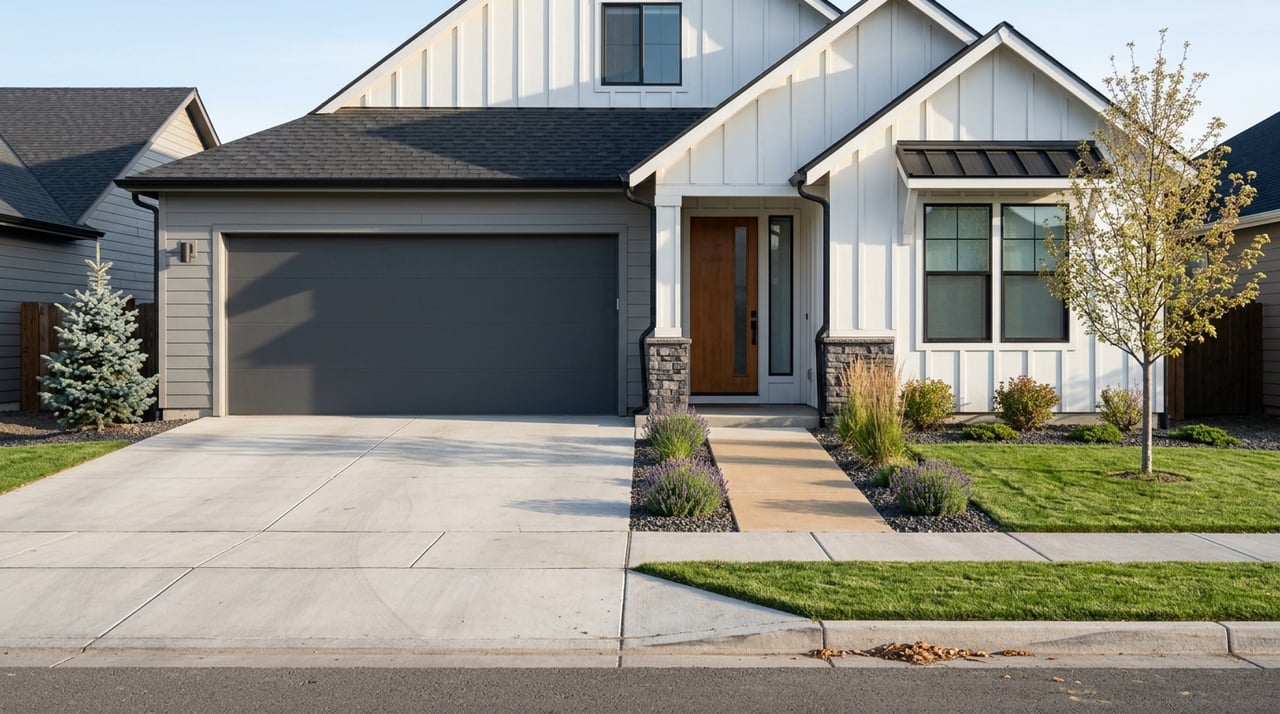
That does not mean Eagle offers only one type of home. The city’s planning documents show a broader mix of housing options than some buyers expect at first glance.
Eagle has more housing variety than many expect
Eagle’s comprehensive planning framework describes several residential patterns across the city and its planning boundary. In and around downtown, the city envisions a mixed-use core with retail, office, civic uses, and a variety of residential options.
The Plaza area is described as supporting residential, office, commercial, retail, and entertainment uses. That includes single-family attached homes and multifamily housing, which can appeal to buyers looking for lower-maintenance living or a more connected in-town setting.
Outside those central areas, the city identifies estate, large-lot, and neighborhood residential areas. It also includes more compact residential forms such as single-family homes, row houses, duplexes, and four-plexes, along with infill and higher-density residential near downtown or transit routes.
What that means for your home search
If you are relocating to Eagle, it helps to avoid assuming every home will have the same feel or lot size. Some areas may offer larger residential settings, while others may put you closer to downtown amenities, mixed-use development, or planned growth corridors.
That variety can be a real advantage. Whether you want a lock-and-leave setup, a more traditional neighborhood feel, or a property with more space, Eagle’s planning context suggests a wider range of options than a simple drive-through might reveal.
What commuting and transportation are like
One of the biggest relocation questions is how easy it is to get around. In Eagle, daily life still leans heavily on driving, even though regional transit planning is underway.
The city says Eagle connects directly to Interstate 84 by way of Eagle Road and State Highway 55. That connection matters if you expect to commute into Boise, travel across the Treasure Valley, or reach the airport regularly.
The Boise airport is about a 23-minute drive from that corridor, according to the city. Boise airport also offers nonstop service to 21 cities on seven major airlines, which can be helpful if you travel often for work or want easier access for visiting family and friends.
Transit exists, but driving is still central
COMPASS notes that high-capacity transit planning is underway along State Highway 44 and State Street to connect Eagle, Garden City, and Boise. That is important for long-term regional planning, but it does not change the current day-to-day reality for most residents.
A city planning document describes Route 44 as commuter-oriented service with no midday citywide service. In practical terms, if you relocate to Eagle, you will likely want to think of driving as your main transportation mode for errands, school drop-offs, appointments, and recreation.
Commute expectations for newcomers
Census QuickFacts lists the mean travel time to work at 23.7 minutes. Of course, your actual commute will depend on where you live, where you work, and your schedule, but that figure offers a useful starting point as you compare Eagle with other Treasure Valley locations.
Everyday services and logistics
A smooth move is not just about the house. It is also about how quickly you can settle into everyday routines.
The city’s resident resources page points newcomers toward practical essentials such as utilities, recycling and trash information, library access, notifications, and a new-resident guide. Those details can make your first few weeks much easier when you are setting up accounts and learning local systems.
Healthcare access is also an important part of the relocation picture. In Eagle, St. Luke’s has the Eagle Medical Plaza and a family medicine clinic at 3101 E. State Street, offering urgent care, primary care, imaging, lab services, and other specialty care close to home.
School context for relocating households
If schools are part of your decision-making process, it helps to start with the basics. West Ada School District says it is Idaho’s largest school district, with 58 public schools serving Eagle, Star, Meridian, and western Boise, and about 40,000 students.
Eagle High School is located at 574 N Park Lane in Eagle. Beyond that, your best next step is usually to confirm school boundaries, enrollment details, and program availability directly with the district as you narrow down specific home options.
For relocation buyers, the key takeaway is that Eagle is part of a large, established public school system that serves a broad portion of the western Treasure Valley. That can be helpful when you are comparing areas within the region and trying to understand how different communities connect.
Outdoor access is a major lifestyle perk
For many newcomers, Eagle’s outdoor access is one of its biggest draws. The Boise River runs through the city, and Eagle connects to Boise through a scenic pedestrian greenbelt pathway.
The city is also working on Eagle Connected, an exploration and recreation plan focused on trails, pathways, parks, recreation, and open space. That ongoing planning effort reflects how central outdoor amenities are to Eagle’s identity.
Parks and trail access in Eagle
Eagle offers several notable recreation spaces that support a wide range of activities. These include:
- Ada/Eagle Sports Complex, with a skate park, bike trails, and a BMX course
- Stephen C. Guerber Park, with a playground, splash pad, picnic shelters, fields, and little league facilities
- Pamela Baker Park, which provides the southernmost access point to the Eagle Greenbelt
The city’s trails page also notes that leashed dogs are allowed on greenbelt pathways and many Sports Complex trails. That can be a plus if outdoor time with pets is part of your regular routine.
Recreation just outside town
Just west of Eagle, Eagle Island State Park adds another layer to the lifestyle appeal. The park offers five miles of trails and a 212-acre off-leash area, giving residents even more room to enjoy the outdoors nearby.
For buyers relocating from larger cities or more built-up suburbs, this kind of access can be a meaningful quality-of-life shift. It gives you more ways to use your free time without needing to travel far.
Is Eagle the right fit for your lifestyle?
Eagle can be a strong fit if you want a higher-value, mostly owner-occupied market with a suburban setting, convenient regional access, and standout outdoor amenities. It may especially appeal to buyers who want proximity to Boise without living in a more urban environment.
It is also a place where your exact location matters. Different parts of Eagle can offer different housing forms, access patterns, and proximity to parks, downtown spaces, or regional routes.
That is why relocation planning works best when you look beyond price alone. Commute patterns, home style, outdoor priorities, and everyday logistics all shape whether a move feels right once you are actually living there.
If you are planning a move to Eagle, having local guidance can make the process much clearer. From narrowing down neighborhoods to understanding the pace and feel of different parts of town, working with someone who knows the Treasure Valley can help you make a confident decision. When you’re ready to talk through your move, connect with Nicole Morgan.
FAQs
What is Eagle, Idaho like for new residents?
- Eagle is a growing city in the Boise metro area with suburban character, strong road access, a mix of housing types, and notable parks, trails, and greenbelt access.
How far is Eagle, Idaho from Boise?
- The city says Eagle is about 10 miles west of Boise, making it a close-in option for buyers who want access to the larger metro area.
What kinds of homes can you find in Eagle, Idaho?
- City planning documents describe a range of housing types, including estate and large-lot residential, neighborhood homes, single-family attached homes, multifamily housing, row houses, duplexes, and four-plexes in some areas.
Is Eagle, Idaho easy to commute from?
- Eagle has direct access to Interstate 84 via Eagle Road and State Highway 55, and Census QuickFacts lists a mean travel time to work of 23.7 minutes, but most daily travel still relies on driving.
Are there parks and trails in Eagle, Idaho?
- Yes. Eagle has access to the Boise River Greenbelt, multiple city parks, trails, and nearby Eagle Island State Park, which offers five miles of trails and a large off-leash area.
What should relocation buyers know about Eagle, Idaho schools and services?
- Eagle is served by West Ada School District, and the city provides access to practical newcomer resources such as utilities, recycling and trash information, library services, and local notifications.